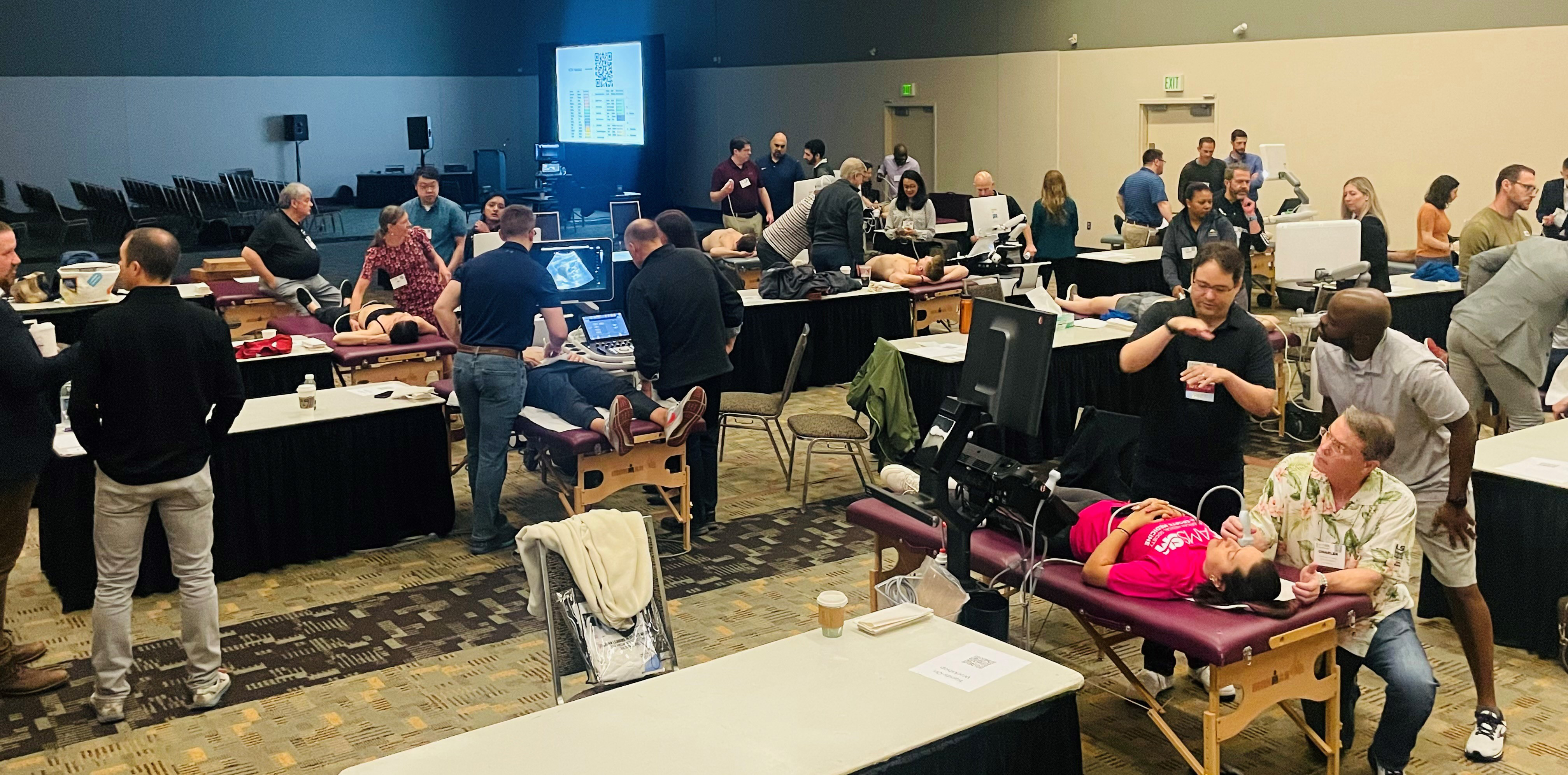
AMSSM LIBRARY OF SPORTS ULTRASOUND PATHOLOGY


Objective
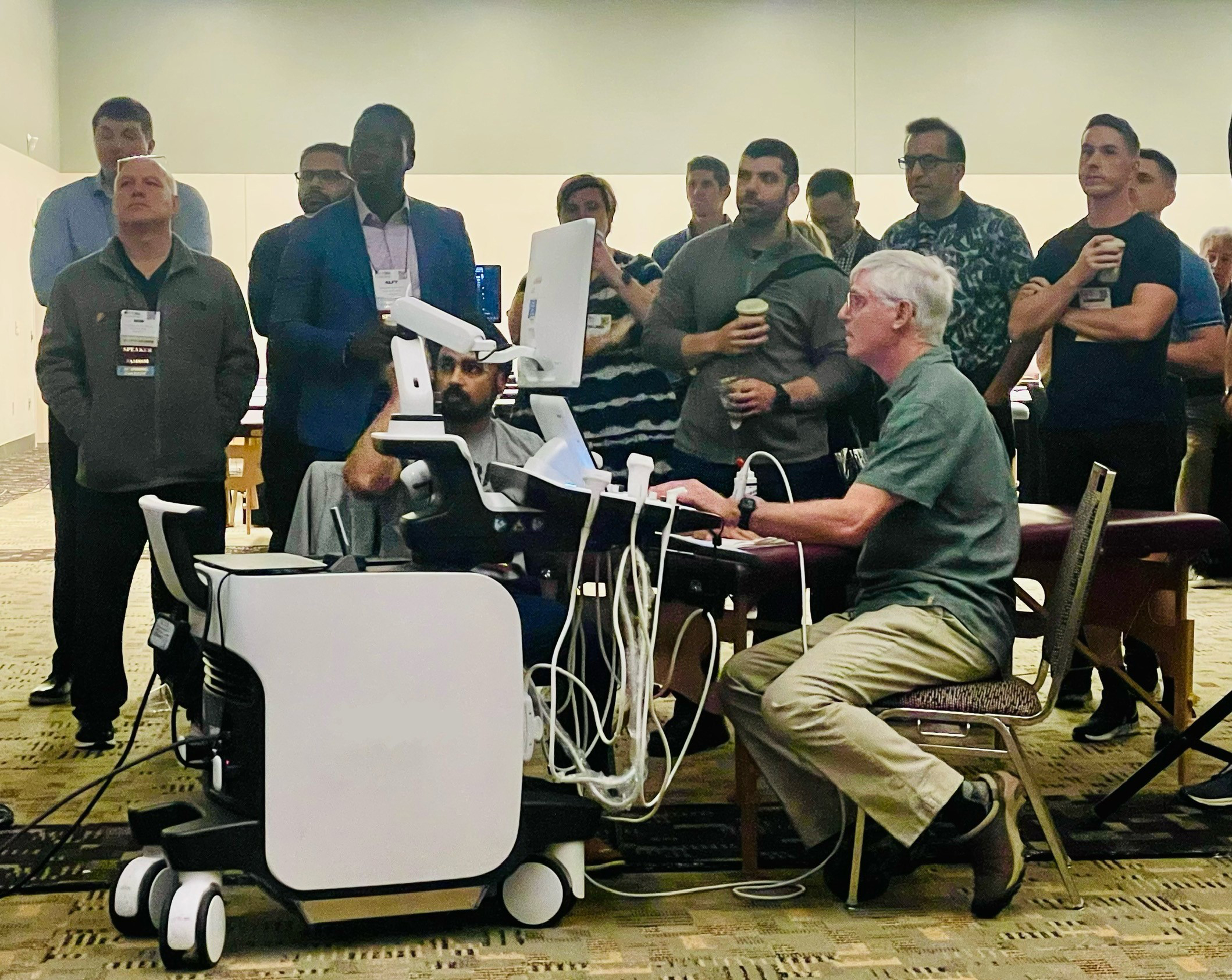
The Sports Ultrasound Committee looks to create an educational resource directed at residents, fellows, and other learners to review both common and unusual pathology within sports ultrasound using case examples. In exploring the library of sports ultrasound pathology, we intend for learners to gain an appreciation for the nuances of ultrasound imaging and increased confidence in recognition of abnormal findings.

Submission Guidelines

  • Current sports medicine fellows are particularly encouraged to submit, with faculty guidance.
  • If a trainee is preparing the submission, the content should be reviewed with a local attending to verify ultrasound image quality and image interpretation accuracy.
  • Following submission, a secondary review will be performed by an AMSSM subcommittee. Edits may be suggested or if images are of low quality, the case may be rejected. Thereafter, the accepted content will be posted and available for member review.
  • All content must be de-identified prior to submission.
  • High quality images and/or videos should be submitted. Low quality images will not be accepted.
  • US Pathology Studies Submission Guidelines – a quick reference guide to a successful submission.


(Login to access the Ultrasound Pathology Study Submission link)

Click here
Adventitial Bursitis of the 1st MTP Joint
A 58-year-old woman presents with forefoot pain and swelling localized to the plantar aspect of the first metatarsophalangeal joint. She reports a longstanding history of daily high heel use as well as increased load on her feet from a half marathon training program. On physical exam, there is edema noted under the first metatarsal of the left foot as well as tenderness to palpation of the soft tissue over sesamoid and 1st MTP joint on the plantar aspect of the foot.
 
Posterior Interosseous Nerve (PIN) Injury
A 22-year-old right-handed male presents with persistent left hand weakness and dorsal proximal forearm pain 8 months after an open reduction internal fixation (ORIF) surgery for a radius and ulna fracture from a motorcycle collision. Exam is notable for significant weakness with finger extension and thumb abduction without sensory loss.
 
Morel-Lavallee Lesion of the Medial Knee
A 31-year-old female rugby player presented with 17 days of right knee pain following a direct blow to the medial knee while being tackled. She endorsed medial knee pain with associated swelling, as well as numbness and tingling localized to the injury location. She denied prior history of right knee injury. She had a history of left knee complete ACL rupture ten years ago status-post surgical reconstruction. She also had a Morel-Lavallee lesion near her left knee five years ago from a rugby injury that resolved with conservative management. Exam was notable for significant ecchymosis over the medial knee with a large area of fluctuance consistent with a possible fluid pocket, with no warmth or erythema present. She was tender to palpation over the right medial femoral condyle and medial patellar facet. She had no strength or range of motion deficits, no ligamentous laxity, and normal special tests. 170 mL of serous fluid was aspirated with ultrasound-guidance, followed by a corticosteroid injection. The lesion recurred three months after ther initial aspiration (about four months post-injury) and was re-aspirated yielding only 10 mL of serous fluid, followed by another corticosteroid injection. She attempted return-to-sport four months after the second aspiration (about eight months after injury), but the lesion recurred a subsequent time. This time following aspiration of 37 mL of serous fluid, a doxycycline sclerodesis was performed. Unfortunately, the lesion recurred two months later after the sclerodesis, and she ultimately underwent an open surgical resection of the lesion with short-term drain placement about one full year after the initial injury. Her post-operative course was uncomplicated, and she returned to rugby four months after surgery without recurrence of the Morel-Lavallee lesion. Given her history of bilateral Morel-Lavallee lesions, she is undergoing a workup for connective tissue disorders.
 
Medial Gastrocnemius Aponeurosis Tear and Hematoma
A 37-year-old male presents with a 6-month history of left calf pain that developed while running. He reported a popping sensation in his left lower leg at the start of his pain without any bruising observed. Exam was only notable for focal tenderness over the distal medial gastrocnemius muscle with intact range of motion and strength of the left ankle. Thompson test was negative
 
Quadriceps Hematoma and Myositis Ossificans
22-year-old male Division I basketball player presents to clinic for re-aspiration of large quadricep hematoma that was sustained during a basketball game about four weeks prior. Initial aspiration was completed two weeks prior. Athletic trainer stated right thigh swelling had recurred, and the patient was having limited knee flexion.
 
Acute Distal Triceps Tendon Rupture
78-year-old male presenting to clinic after a fall at home with posterior elbow pain, bruising, and palpable defect just proximal to the olecranon.
 
Radial Tunnel Syndrome
A 52-year-old female presented with insidious onset of left lateral elbow pain that radiated over the dorsal aspect of the forearm, which had been bothering her for a few months. Motor and sensory exams of the left upper extremity were normal. There was no pain with passive wrist flexion and resisted wrist extension. She had tenderness to palpation over the radial tunnel, but no tenderness over the lateral epicondyle. Tinel sign was positive at the radial tunnel.
 
Prepatellar Bursitis of the Knee
71 yo male presents with right anterior knee pain and swelling after a fall onto the right knee 2 months ago. Right knee pain is aggravated by kneeling. Exam shows a circular subcutaneous fluctuant fluid collection over the patella measuring 6 cm in diameter without redness, warmth to touch or drainage. There is mild tenderness to palpation of the fluid collection but no tenderness to palpation of the medial or lateral joint lines. Range of motion and strength of the right knee are normal.
 
Midportion Achilles Tendinopathy and Partial Tear
A 55-year-old male presented with a one-year history of insidious onset right posterior ankle pain. He is an avid runner, hiker, and rock climber but has been unable to engage in these activities in recent months due to worsening symptoms. On physical examination, the midportion of the right Achilles tendon is markedly thickened and tender to palpation. The patient is unable to perform a single-leg calf raise because of pain.
 
Insertional Achilles Tendinopathy and Haglund Syndrome
A 54-year-old female runner presented with a two-year history of insidious onset posterior ankle pain that began while running. Over the past two months, the pain has intensified significantly, ultimately preventing her from continuing to run. On physical examination, there is tenderness over the superior aspect of the posterior calcaneus at the Achilles tendon insertion. She is able to perform single-leg calf raises and single-leg hops, both of which reproduce her symptoms.
 
1   2   3   4   5   6   7  

© The American Medical Society for Sports Medicine
4000 W. 114th Street, Suite 100
Leawood, KS 66211
Phone: 913.327.1415


Website created by the computer geek